

Max Payne 3: The Unexpected Finale That Reflected My Struggles
Time to really get to know Sam Burke, the twenty-three-year-old boomer!
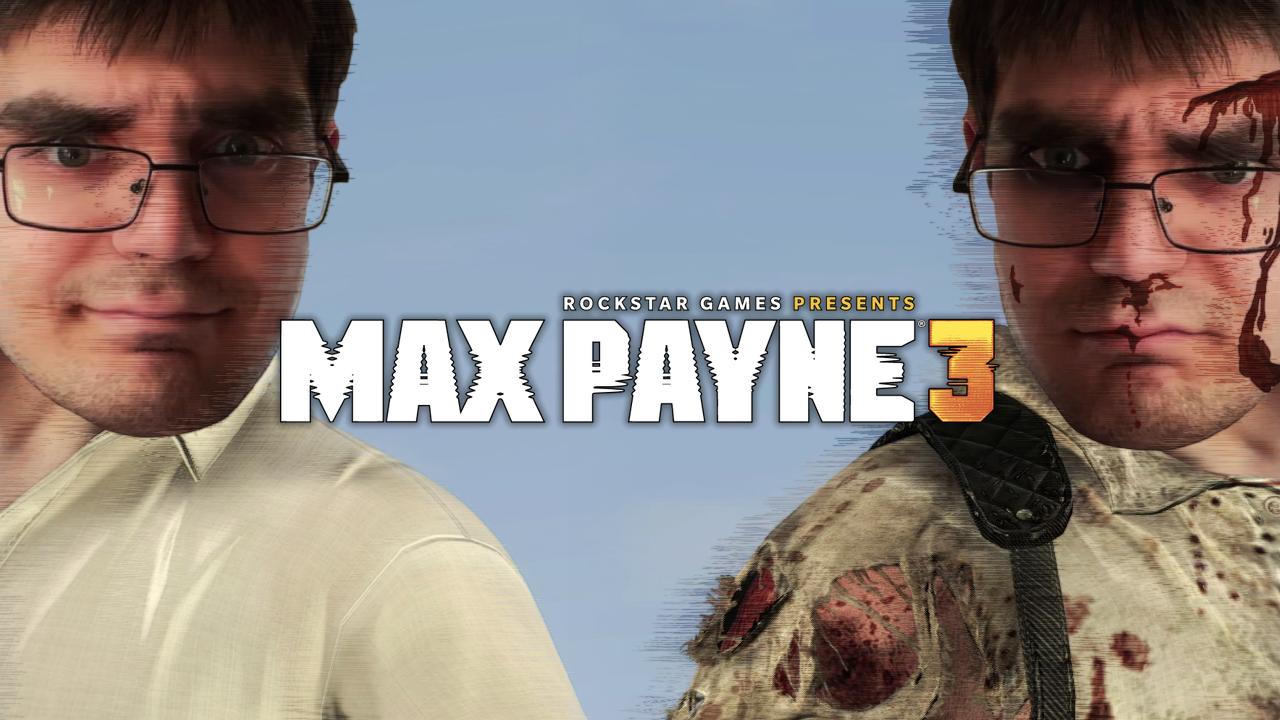

CONTENT WARNING!
This post contains sensitive material that may not be suitable for all readers. The material in question includes:
- Mentions of abuse and trauma
- Graphic violence
- Alcohol and drug use
- Mental health topics (grief, addiction, etc.)
- Bad language
Table of Contents
The Prodigal Son Returns… to São Paulo
Back to the Night the Pain Started
Connecting With the Disconnected
The Whole Shebang
It’s Sunny Everywhere Else
The Prodigal Son Returns… to São Paulo
“I didn’t deserve to walk away. There are no happy endings.”
I moved to a small, pristine, two-year-old township in southeastern Pennsylvania called Exton when I was around six months old, and that’s where I stayed for the next twelve years. My neighborhood was full of giant houses and sloping hills, dense woods lay just outside, and open stretches of conservation land lay just beyond that. I grew up familiar with buildings of fresh stone and brick, giant shopping malls of glass and iron, wide-open state parks for all ages, and a school system with stellar autistic support programs. The games I played, the movies I watched, and the music I listened to all reflected the suburban comfort of this lively, colorful township.
Then, I finished sixth grade, and my family loaded up the moving truck.
The town we moved to was a century-old New England podunk shrouded in dense woods and populated with McMansions and liquor stores (my mom would spend more copious bucks at the latter than ever.) Plus, as wealthy as Exton was, the community was delightful. Here? Being associated with this town is a curse, as everyone near the cape assumes you must be a hoity-toity, keep-to-themselves conservative. My sister would lie to everyone she knew that she lived two towns over for the sake of her social life, and I didn’t even last a year in middle school before the whole district cut me loose. My anger management issues saw a worrying spike, a quick rise that only rose further when my parents split up after nearly thirty years. Having noticed my violent streak, my parents sent me to the emergency room twice, and when I refused to go to school, they sent me to a residential “special education” center called Chamberlain International. Queue the malnourishment, incessant bullying, exposure to fist-fights, introduction to more violent games like Call of Duty, suffocating headlock restraints, and repeated reminders from the prison guards-turned-staff members that they were my new family now. One of my dorm staff even told me the day I left that I belonged to him until the moment I walked out the door.
After several occasions where my parents damn near sued the school, my dad’s verbal in-person spats with my dorm staff, and the startup of a full-scale state investigation into mounting abuse allegations (these began as far back as 1998), I switched to a legitimate special ed school closer to home, one with a strict anti-bullying policy and positively motivational staff. My social life remained dormant, and the juvenile sense of humor I’d picked up at Chamberlain persisted. The closest connections I formed for the next three years were all loose acquaintances until the day I was complimented by a popular girl just a grade below me during a volleyball game (for privacy, I’ll be referring to her as H.) After she expressed her desire to get to know me better, we started talking more and more until we exchanged contact information late into senior year. We continued to keep each other updated on what was happening in our lives post-graduation via Snapchat, as well as recommending new music to each other.
Then, after I’d started my gap year, she sent me suggestive videos of her and her jock boyfriend, something that was very uncharacteristic of her. A couple weeks later, she told me she was working too many hours and couldn’t keep in contact any longer. Next thing I knew, the one friend I made during my gap year moved to Orlando, and with that, my luck had officially run out again. I closed myself off from the world making videos, playing video games, and writing comic book scripts until applying to a state university I was genuinely interested in. Throughout the week of move-in day, I got into two intense verbal altercations with my parents over such devastating issues as my bad attitude at dinner and my decision to take a break from watching a YouTuber I liked. I moved on-campus after my parents rambled on to my therapist for a half-hour straight about how I’d never leave the house or listen to a word they said, and thus, the night terrors and further inability to socialize with my peers outside of class began.
It was during this transitionary period that I happened upon a game I hadn’t played since I moved in early 2013. Now with fresh eyes and a mature adult’s mind, I felt a connection to its cynical protagonist that I hadn’t felt since following the stories of Arthur Fleck in Joker or Arthur Morgan in Red Dead Redemption II. At a time when the cast of the comic books I’m writing are the closest I’ve come to having real friends, the 2012 finale to Rockstar Games’s neo-noir third-person shooter franchise has gone on to become one of my favorite games of all time.
Back to the Night the Pain Started
Who is Max Payne? That would be the guy many gamers have referred to as the unluckiest character in the entire medium. Now, considering I’ve been incredibly fortunate my whole life despite my numerous traumatic experiences, relating to him might seem like a copout, but I’ll get to why and how I’ve been able to do that shortly. For now, let’s explore the overall history of the series. It began in 2001 with an endlessly creative third-person shooter called Max Payne featuring Matrix-inspired dual-wielding, bullet-dodging, and time manipulation gameplay mechanics, which use a “Bullet Time” system fueled by an onscreen gauge that has to be filled back up over time. All the while, the plot’s delivered as a graphic novel that uses a grim, desaturated, detective noir tone and art style. It tells the story of an NYPD detective whose wife and baby daughter are murdered by junkies hooked on a mind-altering hallucinogen called Valkyr. After being framed for the death of his partner Alex, he becomes caught up within the New York mob amidst a deadly snowstorm until being pointed to the creator of the notorious designer drug. As it were, his wife accidentally uncovered top-secret documentation on the creation of Valkyr, thus leading to the initial junkies being tested on and used to silence her. Max exacts revenge upon Nicole Horne, the head of a tech conglomerate called the Aesir Corporation and the creator of the designer drug via “Project Valhalla”, and surrenders to police knowing a fellow member of Horne’s secret society, the Inner Circle, will help clear his name.

Max Payne 2: The Fall of Max Payne is nearly identical to the previous installment in a stylistic sense, although the character designs and much of the voice cast have changed, and the story acts as a direct continuation based around a tragic love story. After returning to the force, Max becomes caught up in a gang war and falls for an alluring assassin named Mona Sax, who was believed to have been killed in the first game. He’s then forced to choose between love and honor, leading him to murder his own partner, Valerie Winterson, on impulse to defend Mona. In the end, he and Mona infiltrate the Inner Circle to confront Russian mob boss Vladimir Lem, but Max discovers too late that Mona had been secretly contracted to kill him. She decides to put down her gun and let him go at the last second… before being shot in the back and killed by Vlad himself. Max takes out Vlad and returns to Mona’s body, thanking her for helping him solve the real case: the case of who he really is. Granted, there is a much happier secret ending that involves Mona’s survival if you complete the game on the “Dead on Arrival” difficulty level, but it obviously isn’t canon.

Finally, here we are, the finale where everything changes… well, mostly everything. The gameplay remains similar (albeit more realistic), but it becomes a neo-noir story that scraps the graphic novel cutscene layout, features a radically different writing style, functions more as a fish-out-of-water character study, and takes place in the last location you’d ever expect from a series like this. Now off the force again, Max is still struggling from the grief caused by the deaths of his family and Mona, as well as addicted to painkillers and having become a self-destructive alcoholic. Suddenly, one night, he’s invited by a fellow ex-cop named Raul Passos to work with him in a security crew in São Paulo, Brazil, which he reluctantly accepts in the middle of being hunted down by the Italian mob for killing the don’s loud-mouthed son. He sets out to rescue the young wife of wealthy socialite Rodrigo Branco from a favela gang called Comando Sombra, only to realize he’d been set up into moving thousands of miles away from home and dragged into a sickening organ-harvesting scheme being carried out by law enforcement and city officials—all performed on low-income civilians to fund the mayoral campaign of Rodrigo’s brother, Victor. It ends with him now a sober man, capturing Victor before he can flee the country and walking off into the sunset across a beach in Bahia, hopefully now free to live his life however he pleases.

Now, what are my feelings toward the series overall? I’ll get more into them as the post continues, but case and point, I certainly don’t like the first two games nearly as much as the third. Gameplay-wise, I can appreciate both as clever and innovative mashups (I sure as hell don’t need to say the title HuniePop again, nor would I like to), even if the perfectly-centered retro shooter camera is tough for me to work with compared to the third game’s modern over-the-shoulder camera, but Max is unfortunately a wet blanket throughout them, often getting on my nerves throughout the second game with his staggering amount of poetic nothings regarding “the past” and “seeing yourself in the mirror” (he does have some dry wit going on in the first, but it’s at the service of a dull and wooden vocal performance.) Clearly, he’s a troubled man who has every right to express his grievances, but (a) it goes on over chapters in which his trauma and self-reflection aren’t even relevant, and (b) the third game shows us more of his struggles than he has to tell us about them himself. That’s the missed opportunity in the first two titles that the third takes full advantage of.
I like to explain my mild annoyance with his narration in Max Payne 2 by using RedLetterMedia’s re:View episode on Bone Tomahawk, in which Jim praises Patrick Wilson’s performance by raising the question, “how do you suffer through a movie without just sounding like you’re complaining all the time?” This is achieved in Max Payne 3, as Max does go through a lot of self-reflection, but he’s now a character with a stronger sense of resilience and even humor. As a matter of fact, and as I often like to describe him, he’s a violent Punisher-esque vigilante in the first two entries. In the third game, on the other hand, he’s a hero through and through.
Then again, aside from just the character of Max, I don’t find villains like Horne and Vlad particularly interesting—Vlad at least has some charm and depth compared to the cartoony baddie Horne turns out to be, but I’ve always been annoyed by his dying line, “I was supposed to be the hero,” which comes minutes after he claims the killing has only begun, that “it’s better to reign in Hell than to serve in Heaven”. Also, I’ve basically developed a scale for how snarky and likable a female character is written, with characters like Bonnie McFarlane from Red Dead Redemption and Catwoman from Batman: Arkham Knight fitting into the bottom of the scale (highly snarky but highly likable) and the HuniePop cast fitting into the top (snarky to the point of being horrendously unlikable). In Max Payne 2, Mona probably fits just above the middle point for being needlessly rude at times, particularly at the construction yard at the end of part two⏤whether that be telling Max to “go to Hell” just for saying he needs the cops to arrive, showing him an attitude for asking to handle some business alone, or calling him a bastard for nearly getting killed, like it’s somehow his fault!
Hmmm… maybe, we should get back on the topic of the third game. I’m pretty sure I lost the thread paragraphs ago.
Connecting With the Disconnected
Looks like it’s time to answer that salient question: how does a modest twenty-three-year-old autistic college student feel an instant connection to a middle-aged, painkiller-pumped, alcoholic ex-NYPD detective? Well, first off, even when I had a social life, I’ve always communicated better with adults than anyone my age, especially nowadays. For instance, I was just assigned a new job coach, and because I wasn’t totally comfortable with my previous one because he was about my age, thus creating a disconnect between whether he should be considered a professional associate or an actual friend, my current one is at least thirty. Case and point, aside from my next-door neighbor, most of the people I know and talk to are older adults, so funny enough, Max’s older age is actually a plus.

On a deeper level, however⏤aside from his own obvious trauma and mental health issues⏤I mostly relate to Max in terms of his overarching struggles as opposed to his specific struggles. What I mean by this is that I’ve never had to meet with a secret society of wealthy officials, set out on a manhunt against the Russian mob, or sneak into a decaying hotel to investigate an organ-harvesting operation. However, the personal issues Max is working through include the inability to move on with his life (while wasting away at a bar in Hoboken, New Jersey) and settling down in a new and unfamiliar place (among the wealthy citizens and favela residents of Brazil), both of which I still haven’t fully worked through myself. On top of that, he has to shed basically every friend and associate he knows, as well as trudge through the overwhelming loneliness as a result of that. At no point is he ever given time to recover from any of it.
Following the surprise murder of Rodrigo, he sobers up and sets out to rescue his wife Fabiana from a favela called Nova Esperança, only for her to get shot in the head and killed in front of her sister and Passos’s romantic partner Giovanna. Giovanna then has to watch as Fabiana’s brother-in-law, Marcelo, is burned alive by a paramilitary group called Crachá Preto, who turns out to be responsible for rounding up civilians for the organ-harvesting scheme. From that point on, Max works tirelessly with a pregnant Giovanna to evade law enforcement and make it to Passos alive, making for my favorite chapter in the game. Yet, even after he covers her so she can make it to Passos’s helicopter, thus ending dozens of lives for their own unborn child, Passos flies off without him. Just like that. He’s picked up by a sketchy and cowardly cop named Vincent Da Silva, who lays on the hard truth that Passos had been hired by Victor to bring Max to São Paulo, that Max had been used to (a) take the fall for Rodrigo’s murder and (b) launder money through Panama to fund Victor’s campaign on a previous job with Passos.
“It was the question I kept on asking myself: how could I have been so blind? I’d been convinced the Brancos had gotten the wrong man for the job, but maybe, Da Silva was right⏤I was the stooge, the bad joke everybody got but me.”
– A man who’s been put through as much confusion as me.
Now, first off, Passos’s betrayal despite the bond between Max and Giovanna has forced me to recall what happened between me and H. It should be noted that she’d dealt with her own boyfriend cheating on her with her own best friend, as well as the death of her favorite counselor, both events I did my best to help her through. Because of that, seeing Max flabbergasted by the betrayal after everything he’d done for Giovanna has only served to further strengthen my emotional connection to him, and it only grows stronger after he forgives Passos and wishes him and Giovanna a better life elsewhere. See, I’ve socially isolated myself since mine and H.’s fallout, but I’m still no incel⏤I show women respect because I grew up in a household of mostly women, and because it was mostly girls who opened up to me in high school, so I’ve always wished H. the best since she faded away. I’ve never been as angry about it as much as I’ve been just confused and sad; as a matter of fact, for the first time, I considered during a recent therapy session that ghosting me may not have even been her idea⏤maybe, her boyfriend was just feeling jealous, even if she was talking to me because I had no one else I could talk to. So, to see this troubled man still wishing this couple the best of luck after they’d essentially left him friendless hit me on a level I never thought it would.
“It’s alright, it’s done. And, hey, I’m having myself a fun ol’ time. Maybe, this is how things had to be. Figure I might as well die in the sunshine as die in the snow.”
– One unceasingly forgiving son-of-a-bitch.
Now, like I said, Max and Passos had a previous job in Panama, that is on a yacht protecting Daphne Bernstein, the ex-wife of a Wall Street magnate. In this chapter, you get Max straining to have a positive outlook and sense of humor when even a tropical vacation can’t soften his mindset (I’ve personally been at this exact point, as well), and seeing him try to sound polite towards a coke-snorting, self-absorbent douchebag like Marcelo is painfully relatable. In fact, so is the start of the second chapter, in which he’s protecting Marcelo, Fabiana, and Giovanna at a downtown nightclub. As someone who went to a college in the city, there’s few scenes in the game I can picture myself stuck in more than that brief sequence of Max standing reserved in the corner of the elevator while surrounded by three upbeat yuppies. Same goes for when he’s getting blinded by the flashing neon lights and nudging his way through throngs of party animals dancing to ear-grating techno music.
“This kind of place made me want to puke. I needed a real drink to deal with the electronic music and the robotic people.”
– Someone who I’m afraid might know me better than anyone.
Anywho, back on the subject of the Panama chapter, when Passos and Marcelo leave Max for a moment to discuss the cash being laundered, Marcelo complains about how “stuck-up” Max is, saying he should smile more because “life is good”. Next thing they know, Max just wanders alone below deck to his quarters, blacking out from inebriation. As he wanders there, the focus is very briefly shifted to Marcelo and all of the other happy young rich people partying it up. This hits me about as much as his last farewell to Passos and Giovanna, that is in relation to my family and fellow college students.
It should be stressed that I’m forever grateful for all the things my family has done to ensure happy life for me, but as you’ve heard, there’s still much I conflict with them on. For one thing, they’re the kind of people who, if they don’t understand why someone feels a certain way about something, act like none of their reasons matter⏤they make it seem like that person’s morally wrong for feeling as such. Case and point, if I become heated by something, they escalate the situation and then blame me for when it blows up into a tantrum. I couldn’t even express my grief over H. without being told, “It’s not like she died or anything.” This is why Marcelo’s attitude about Max affects me like it does, just that inability to understand someone else’s feelings and what’s causing them to feel that way. Hell, that brief yet cynical focus on the carefree partiers feels like a gut-punch on its own, as if to emphasize how alone Max is in his struggles. As “Folsom Prison Blues” by Johnny Cash goes, “those people keep ‘a movin’, and that’s what tortures me.”

In all honesty, my ability to relate to Max Payne 3 has surprised me as much as it would anyone else, but it’s also just plain staggering how much of it I can relate to. It might just be a testament to the quality of the writing, but although it follows the critical screenwriting practice of “show, don’t tell” more than the first two games (although I will admit the narration could be trimmed down at times), it’s still by far one of the most quotable games I’ve ever played. Even now, I’m amazed by the sheer amount of lines delivered by Max himself that I can tie to my own experiences.
Granted, even with so many self-meditative aspects, there is one that I’ve been able to chuckle at a little, although it does bring us back to H. During chapter ten, Max can turn on a TV in a tiny office and watch an animated episode of Captain Baseball Bat Boy⏤a goofy kid’s cartoon and comic strip with a recurring presence throughout the series⏤in Portuguese, an international news report, and a hotel commercial. However, in a surreal twist, the hotel turns out to be called “Hotel Mona”, with the tagline “an unforgettable place to stay” being read out by a seductive female voice. With that, Max rightfully figures it’s time to get back to business. Now, on one of the first class sessions of my last screenwriting course, attendance was taken, and H.’s name was the same as one of my classmates. This wasn’t surprising, as it’s a common enough name, but that was followed by someone with H.’s same last name and a first name that rhymed with hers. Since then, I’ve joked with others that I heard Max narrating in my head at that very moment: “I must be losing it.”
The Whole Shebang
This post has been unusually personal thus far, even more so than the video it’s based on (that video can be watched here, but like the other vlogs I’ve uploaded, the webcam quality is subpar, to put it lightly.) Much like that video, however, I’d like to dedicate the last body section of this post to the game as an overall experience, as my reasons for loving it far exceed its relatability. Of course, there was a 2008 Max Payne movie starring Mark Wahlberg, but instead of talking about that admitted dud (to be honest, I’ve never actually seen it first-hand), I’d like to point out that Max Payne 3 is the best Max Payne movie despite not even being a movie. Although it lacks the first two games’ gloomy graphic novel cutscenes, it makes up for it by featuring an eerie, grungy, digital glitch-riddled aesthetic that does a lot to compliment Max’s addictions and the nastier plot elements, not to mention the quick flashes of text boxes containing certain words and phrases as characters say them.
The best way I can describe the overall tone and momentum of Max Payne 3 is Die Hard crossed with an atmospheric slow-burn A24 horror film. As brutal and exhilarating as the action is, it’s just as propped up by the more meaningful and smaller-scale character moments, notably the moody intermissions during the first half that hold on Max smoking, drinking, and reflecting. Sure, smaller details like him flopping into bed after vomitting and accidentially shattering a glass in his hand are what sell these scenes as tragic, but the game might very well have the greatest introductory sequence in video game history. Other than the several clever match cuts between his current and past lives, this is thanks in part to the sharp contrast between his miserable entrance into his São Paulo apartment and all the desperate reassurances in his head. He keeps telling himself that it’s time to move on, that drinking won’t do him any favors, that his self-respect is coming back… and yet, it’s all completely at odds with his bad habits and the dreary yet beautiful classic orchestral theme playing over it.
Now, right there, I made sure to praise the usage of the original Max Payne theme, but one of this game’s most noteworthy advantages over its two predecessors is its soundtrack. Some tracks of theirs, like the “Byzantine Power Game” score from the first game and Vlad and Mona’s themes from the second game, are actually fairly decent⏤not to mention the Pearl Jam-esque beauty of “Late Goodbye” by Poets of the Fall from the second game⏤but the techno-alternative band HEALTH knocks it out of the park with the third game’s score. I unironically mean that, on the level of Daft Punk with TRON: Legacy‘s score with no exaggeration. Whether it be the harsh drum beats of the chapter thirteen score, the exotic jungle disorder of the chapter five score, the somber intermission synthwave tracks, or the blood-pumping yet nonetheless tragic main theme “Tears”, it couldn’t suit the consistent combination of intense action and slow-moving introspection any better. In fact, at the start of the final chapter, the Max Payne theme plays for a brief moment only to fade out once Max’s cover is blown. I love to interpret the rapid switch from the classic theme to the bleak, thumping HEALTH track “Future” as a way of saying, “Don’t you forget that this is a whole different game, you wistful pricks.” It’s like the opening of Exorcist III, in which “Tubular Bells” starts to play before being overpowered by a moody droning noise, as if William Peter Blatty’s trying to make sure the viewer knows it’s not the first movie.
Speaking of the soundtrack, it resourcefully makes use of the “interactive score” mechanic, which adds and removes instrumental and/or vocal tracks to the overall mix as the player progresses and has since been utilized in all of Rockstar’s games. Furthermore, at Walton’s Bar during the fourth chapter, there are three licensed songs that play at different periods. After hearing each of them , the first song⏤”Bright Lights” by Gary Clark Jr.⏤has become one of my all-time favorite songs. While I’ve also grown to love the second, “Wild in the Streets” by Garland Jeffreys, the third one just isn’t my cup of tea, that being “The Hooker” by Tom Zacharias (Seriously? No love for “Whiskey Bar” by The Doors?) Its one quality I consider noteworthy is that it sounds like Jefferson Airplane doing a cover of “One Way or Another”. Anywho, the version of “Bright Lights” at Walton’s Bar turns out to be a rare cover that’s conveniently been cleaned up and uploaded to YouTube in high-def, although how the uploader was able to access it is unclear.
As a cinematic experience as opposed to just an entertaining experience, Max Payne 3 is also elevated in part by its performances, but I want to set my focus on the voice of Max himself, James McCaffrey, who is sadly no longer with us. He’s been providing Max with his signature rich and smoky voice since the start of the series (he was actually Irish-American, much like Roger Clark, who provided Arthur Morgan with his own now-iconic voice), although this is the title in which the character’s appearance is so clearly based off the actor’s, with Max in the first game instead featuring the inappropriately nonchalant visage of series creator Sam Lake. Regardless, Max Payne 3 was probably a pretty important role for McCaffrey, as the first two games seem rather limiting in terms of personality from what I can tell. Although he does have a couple of opportunities to give it his all, most of his dialogue is restricted to the same monotone droning that could’ve worked if it only applied to his narration⏤his performance isn’t helped by the fact that it applies to almost all of his dialogue. As for the third game, while he’s somewhat monotone in his narration, it’s monotone in a way that comes off as more jaded and cynical than cold and robotic, which gives him far greater emotional range. Meanwhile, all of his spoken dialogue comes off as natural, expressive, and just generally well-delivered. I like to label his exchange with Neves on the roof of the Imperial Palace Hotel in chapter twelve “the Oscar scene”, as McCaffrey is given a golden opportunity to unleash his acting abilities in one furious, cathartic, hate-fueled shouting match in reference to the organ-harvesting operation he’d just uncovered.
With shame, it should be noted that the game wasn’t a bestseller for Rockstar, and many still take issue with its execution as a major departure from the rest of the series… which was probably Rockstar North’s intention. Again, unless I’m directly poking fun at it, I’d rather not bring up HuniePop too many times anymore, so if you’re somehow wondering which of these games to play, I’d like to remind you that this one features the stunt embedded below at the end of its third chapter. Your decision has just been made.
If you’re still not convinced, (a) I’m afraid you might be monster who can’t be reasoned with; and (b) every great action movie has either a bar or strip club shootout, but Max Payne 3 has a dive bar shootout, a high-tech dance club shootout, and a seedy strip club shootout. What more could you possibly ask for?!
It’s Sunny Everywhere Else
Throughout this post, I’ve tried to connect my own personal experiences to Max Payne and his closing act as tastefully as I could, given the severe discrepancies between his experiences and mine. As I mentioned early on, any connections between our literal struggles are few and far between, and it’s very likely that my ability to relate to this game derives from this desperate need for understanding from others during a turbulent transitionary period. Luckily, I have both a job coach and therapist who seem to be offering the genuine support I was lacking at the time I started college, as well as the next-door neighbor I also mentioned previously. Aside from that, it’s writing these posts and my comic scripts that act as two motivating passions I hope will linger as I plot out my career and lifestyle. Whereas Arthur Fleck from Joker represented a clear understanding of how mental illness can contaminate your entire outlook and Arthur Morgan from Red Dead Redemption II captured the plague of uncertainty amidst a lack of strength and willpower, Max Payne faced my same inability to break the cycle of self-pity and self-isolation, but at the end of the day, these protagonists all share the same common tribulations: loneliness, the loss of much-needed support, and the disintegration of valuable relationships. All I can say from here is that it’s pretty telling that, back in Pennsylvania, I connected with characters like Tails and Shrek only to later find greater meaning in those from M-rated shooters and psychological thrillers. Whoever thought to cross the autism life with growing up has some explaining to do.

Leave a Reply