

Anime: My Biggest (and Weirdest) Pet Peeve
Thought the “Wow!” Signal was our only plausible contact with extraterrestrials?

CONTENT WARNING!
This post contains sensitive material that may not be suitable for all readers. The material in question includes:
- Bad language
- Mentions of xenophobia
- Mentions of abuse and trauma
- Sexual and suggestive content
- Violence
- Mentions of historical tragedies
Table of Contents
Déjà Vu, Anyone?
First Impressions Are Hard to Erase
The Infection Begins
A Quick (and Suggestive) Aside
The Finer Origins of Discomfort
One Final Analogy to Tide You Over
Déjà Vu, Anyone?
If you can recall, the introductory section of my very first post here was quite irrelevant to the main topic, although it did end with an appropriate enough segue. The subject of that particular introduction was a Sonic Adventure DX mod I’d released on Gamebanana, and the gist of what it does is change the art style of the game’s anime-style humans. Admittedly, this was a way for me to feel more comfortable being surrounded by and interacting with these NPCs in-game for reasons I’ll provide soon, but a second intention of mine which I decided to emphasize in the mod’s description was to make the designs of the NPCs more consistent with those of the human NPCs in later Sonic games (Sonic Adventure 2, Chronicles: The Dark Brotherhood, Unleashed, etc.) without altering their clothes or removing their most notable facial features. Now, before we get to the punchline, I made sure to clarify in the description that I wasn’t aiming for a more “western” art style, given the impressive range of native art styles from Japan (I tend to be more comfortable with Japanese art styles that are exceedingly simple, like those of Animal Crossing and Hello Kitty; and ones that are exceedingly realistic, like those of Silent Hill, Resident Evil, and Metal Gear Solid.) Case and point, I was actively trying to avoid sounding ethnocentric and to quell any potential complaints in the comments section.
Well… as it were, my attempts were pretty damn feeble, because I started seeing comments from people who (a) found the new art style I’d introduced hideous and revolting, and (b) took the changing of an anime-inspired visual style way too personally. I mentioned a couple of the most absurd comments at the start of my lost media post, like one that referred to the NPCs jokingly cheering about their faces being “fixed” on the cover image as “inflammatory” (yes, I’m just as confused as you are about that specific word choice) and an unsubstantiated yet positive response-flooded claim that the game was intended as a Studio Ghibli-inspired anime story, only with zero sources to back it up. Little did I know, however, that checking the comment section months later would reveal to me an even wider ocean of hate-filled responses calling me an ethnocentric monster for removing a Japanese visual style from a Japanese game—those users clearly read the description before saying as such—with some commenters even asking me what kind of evil I had to have in my heart in order make something like it. So, the burning question is, was any of the backlash earned? How inexcusably hideous and offensive was the end result? Well, how about you take a look down below and decide the answer yourself?
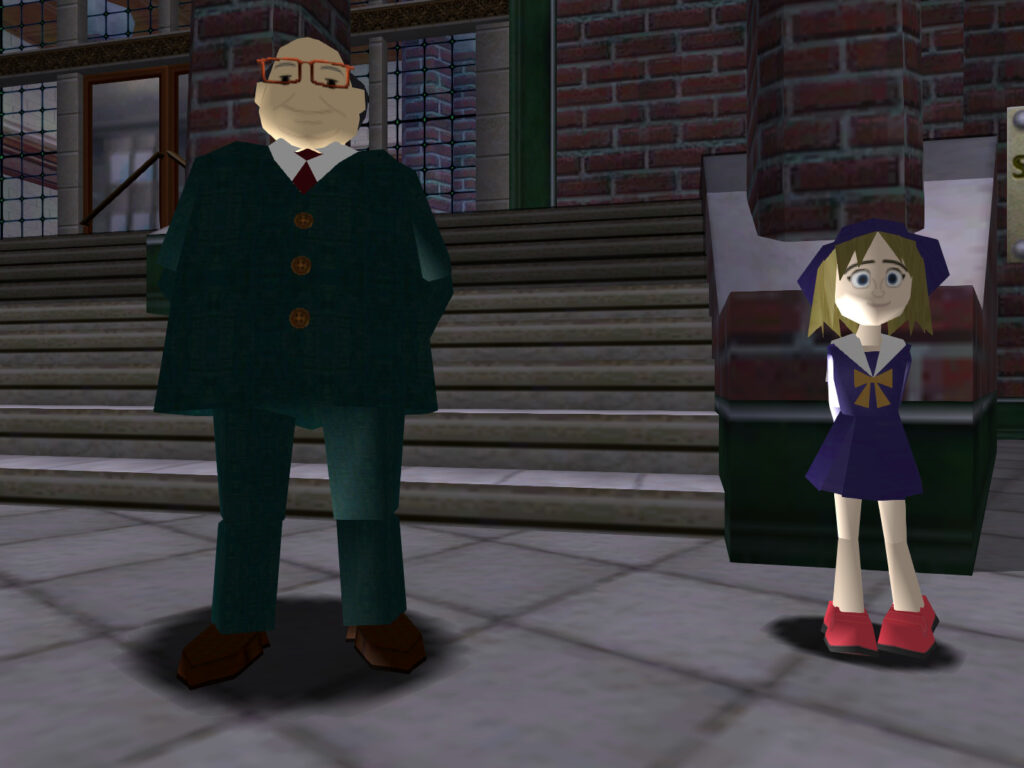
Wow. How very unappealing and insensitive. I’m watching a YouTube documentary on the making of Howard the Duck as I’m writing this, by the way, so go watch that notorious flop of George Lucas’s creation in case you want to see what “creepy” and “uncanny” really look like. Hey, speaking of creepy and uncanny, like I just suggested, the entire anime style comes off as exactly that for me, and if scenarios like this little Gamebanana kerfuffle have accomplished anything, they’ve guaranteed that my chances of ever opening my mind up to the style are lower than they’ve ever been. Granted, in order to understand why my feelings toward anime have grown so prevalent over the years, we’ll need to start at the beginning, considering they go back a long, long way. Oddly enough, it all started thanks to the perfect storm consisting of my autism, my two sisters, the aforementioned Sonic game, and a range of other animation styles.
First Impressions Are Hard to Erase
Ah… Exton, Pennsylvania. The pristine township I knew from the time I was six months old to the year I completed sixth grade. A grassy neighborhood with winding trails to explore in the summer and fall and downward slopes to sled down in the winter, all within a wooded area filled with the same giant houses and swathes of open farmland stretching just beyond that. Whether it be traversing the multi-floored Exton Square Mall (now closed forever), window-shopping along the vast array of modern stores and restaurants on Main Street, receiving biking lessons at Miller Park (no issues there!), or celebrating my birthday with laser tag at the Grand Slam arcade, there was always something to do and somewhere to go, which is already more than I can say about my current hometown. Translation: my cats and I could wander past sundown without the fear of coyotes that may or may not exist in the area.
I often point out how much of a blessing it was to have been born in 1999, and I’m not just referring to the special needs support I was able to receive, as I would be introduced to early and mid-2000s Nickelodeon and GameCube and Wii games like SADX. Much of this time would be spent with my two older sisters, Emily and Olivia, with whom I’d explore the wholesome, grassroots world of early YouTube and struggle to keep up with the rapid-paced soundtrack of Dance Dance Revolution on the PlayStation 2. No negative emotional resonance was cast by old games like Super Mario Sunshine and Spirits & Spells (yes, that was actually a game that existed for the GameCube, and we will be discussing it sometime soon) or cartoons like SpongeBob and Rugrats, as I could always follow the plot, appreciate the animation, and laugh at the characters’ antics and interactions. Hell, I never even considered that franchises like Sonic or Mario might’ve been Japanese, and knowing that wouldn’t have bothered me, anyway—I simply found solace in the warm, welcoming atmosphere and adorable retro charm they carried.
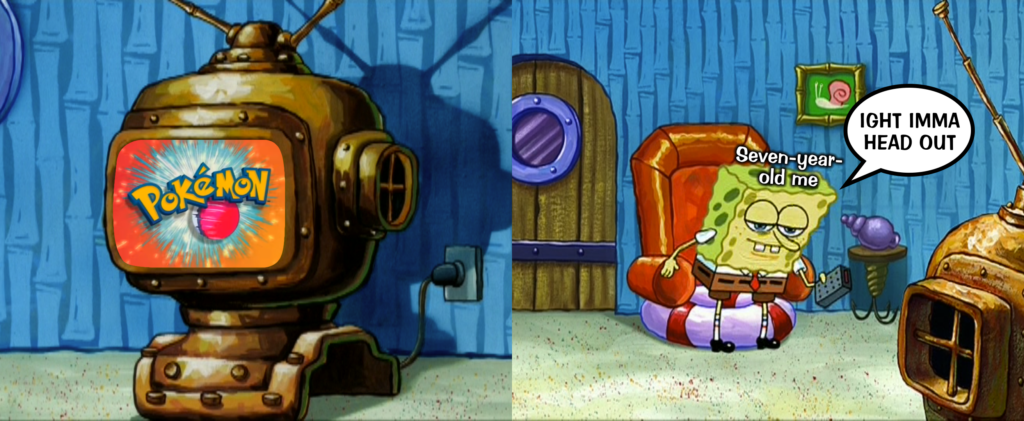
Then, the unsettling contrast became apparent, and by “contrast”, I mean between the stuff I found genuine enjoyment in between school and homework and the stuff that… well, wasn’t much more enjoyable than school or homework. I’m not even referring to the explicit shows and movies I watched countless times in spite of the many, many ways they negatively influenced me (the documentary from the previous post being a perfect example, as well as adult cartoons like Family Guy). Rather, I’m referring to the types of cartoons that were universally popular among other kids my age. Think of it this way: I’d be waiting for an episode of Fairly OddParents to start in the family room (basically our giant living room), listening to the soothing K.D. Lang CD my mom was playing in the kitchen nearby as I did so, until my sisters came in. They’d let a string of pop music videos play in the background on MTV or travel and fight their way through RuneScape on their laptops, and I was a-okay okay with staying in the room for that… well, until they’d decide to change the channel and start watching Pokémon or Yu-Gi-Oh! Now, I cared enough to memorize every line from the first three seasons of SpongeBob and the GameCube-era Sonic games from SADX to Heroes by the time I was eight, and their fluid, simplistic animation surely helped make this so.
When these two shows came on, though? Well, all I knew when watching them was that something was very wrong, or at the very least, different. Characters didn’t talk or act like the characters I knew; the action and humor were way too over-the-top, even in the realm of cartoons; and the animation had this stilted, otherworldly quality that, without exaggeration, had me squirming in my seat. To see characters blow up at each other over very little and toss one another into space until they’d turn into a twinkle in the sky felt unrestrained and inappropriate, as when something crazy happened in the cartoons I was familiar with, it was paced according to the severity of the context, as I’ll soon be explaining. Still, I think the best way to describe these vibes was summed up by Mike and Jay from RedLetterMedia in their Garbage Pail Kids Movie episode of re:View. Watching it as a kid, Mike could tell something was cheap and off about it, but as Jay points out, he was probably too young to fully articulate what and why.
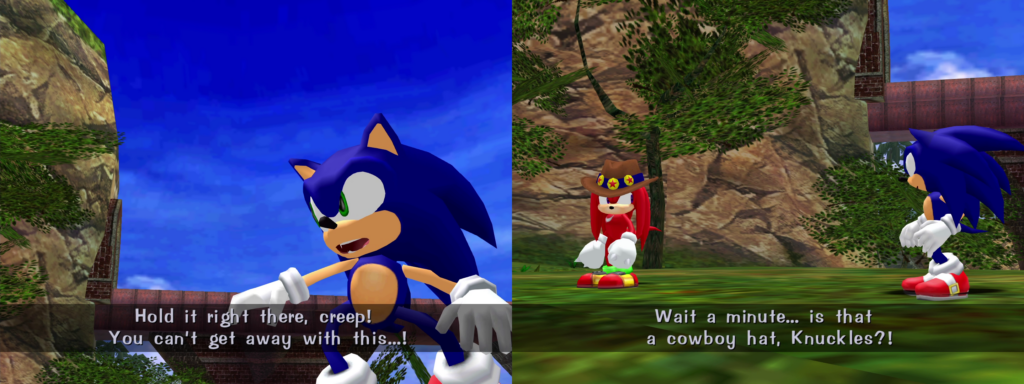
Before moving on in time, however, some people might be curious about my feelings toward Sonic-related anime like Sonic X and the 1996 movie… and the answer to that is ditto. No, the fact that they were chock-full of Sonic characters and settings was not enough to quell my severe discomfort while watching them. I was confused by the 1996 movie, and not just because it came from the classic era, but thanks to the characters I didn’t recognize like the swirly glasses-wearing owl and Sara the creepy neko-girl; Metal Sonic being given the title of “Hyper Metal Sonic” despite being… well… just a mildly upgraded Metal Sonic; and why the hell Knuckles was wearing a cowboy hat the whole time when, as someone who’d tried some of the classic games on the Mega Collection and early 3D games like Sonic R and Sonic the Fighters on the Gems Collection, I hadn’t once seen him wear a hat like that (funny enough, Liv tried explaining to me that Knuckles in that movie was actually Knuckles’s brother who also happened to be named Knuckles, which only served to confuse me further.) Either way, the humor was so unfunny and the animation was so inconsistent that it was physically bothersome to watch, and that sums up most of my feelings toward Sonic X, as well. Then again, I hated every moment of the show that focused on the human characters, the line delivery by the different voice actors for Sonic and friends sloped without rhyme or reason, Eggman’s two robot henchmen were annoying enough to make Orbot and Cubot charming in retrospect, and I sure as hell didn’t appreciate the attempts to work their own original characters into the Adventure game plots I was already familiar with. I recall a neighborhood friend named Tyler Wright coming over to (a) play a Teenage Mutant Ninja Turtles game he owned on the GameCube and (b) watch Sonic X, but the latter probably happened once before I stopped doing it with him altogether and decided I’d stick with watching Wonder Pets instead.
Until I moved away from Exton, I never really gained a full grasp on what anime was or what set it apart from the animation I liked. Funny enough, upon starting seventh grade at a new school in a new state, I went through a brief phase where I became obsessed with giving it a try, even asking for information about it from my peers and classmates. Granted, I set my sights on shows like Bleach and Soul Eater before watching the very first episodes of both, and my immediate feelings were… well, suffice it to say, I didn’t enjoy them too much. I was baffled by the Bleach pilot, with Ichigo stomping some poor soul’s face into the pavement without context (and by “into the pavement”, I mean his face was literally driven through the concrete like it was drywall); his father kicking him in the face the second he returns home; his mother embodying the innocent anime girl archetype I now want to strangle; his father denying responsibility for abusing his son in the most overdramatic, infantile way possible; and the senseless, unfunny slapstick that followed. As for the Soul Eater pilot, I barely made it through the first thirty seconds, so I there’s not a thing I could tell you about it.
At that point, I figured I was done with anime, but it wasn’t quite done with me. Back at the abusive boarding school I detailed in my Max Payne 3 post, there were plenty of teachers and interning staff who were simply aiming to work in the special ed system without a clue of the nightmare they were getting themselves into (take Mark Goddard from Lost in Space, for Christ’s sake, a name that won’t mean anything to mostly anyone younger than sixty), and one teacher among them taught an Asian Studies class on-campus. For as fascinating as this class was sometimes, it was the same class where the “Ghibli Misery” began. Yes, we did watch Spirited Away three times in two languages in this class, as well as other Studio Ghibli films like Howl’s Moving Castle and The Cat Returns several times each, and I stayed in class every time because I was (a) afraid of the staff members outside and (b) unwilling to risk coming off as rude.
This was the point where I began to outwardly hate anime, and my overexposure to it wouldn’t let up in the following years. In fact, it would only end up growing. Exponentially.
The Infection Begins
It was during, but more so following, high school that the true proliferation of anime throughout pop culture started dawning on me. Admittedly, as a high-schooler, I let my problems with anime affect my overall worldview, to the point where I was reluctant to involve myself with anything even remotely Japanese, even when it came to reading a novel about the World War II-era internment camps for my English class. Thankfully, this was just another phase, and I’d come to acknowledge by my senior year that my sensitivities toward the art style were never based on cultural differences. After all, it’s important to note that anime-inspired shows from non-Japanese countries, like Avatar: The Last Airbender from America and The Moomins from Finland, have always bothered me for the same reasons as, well, actual anime. To me, they replicate the style of anime so faithfully that they leave me feeling just as uncomfortable, even though I get the impression that most people would respond with, “but they’re not actually anime!” This is also the same reason why I’ve never liked the modern DC animation style from Batman: Under the Red Hood and onwards, if you must know (if you can believe it, I’ve always been okay with the visual and animation style of Paul Dini and Bruce Timm’s early days of the DCAU, especially after it transitioned from cel to digital, and those shows and films were animated by Japanese studios!)
Even then, though, I struggled with making friends during my high school years, and among all the anime enthusiasts in my small class, my feelings and opinions probably didn’t do me many favors. The one real friend I made in high school (see my Max Payne 3 post for more info regarding my history with her) didn’t like it herself, but for her, it was from the mindset of, “I don’t get Japanese culture because it’s just too weird!”, whereas I’d long since shed that mindset by then. Hell, even during my first couple college courses, everyone who didn’t like anime shared the same mindset, which left me wondering if I’d ever meet someone who holds a no-exceptions anti-anime mindset without xenophobia. To this day, I don’t believe I ever have, or at least anyone younger than 60.
Funny enough, you’d think that, as I grow more culturally aware, the more anime I see, the more I might warm up to it. Well, if that’s the assumption you’ve decided to make, then you must’ve already forgotten how it started. Truth is, no matter how far I distance myself from the style, it continues to shove its way back into my field of view in some form. I realized this after starting to watch a variety of YouTubers regularly, the earliest instance probably having been the time I lost all respect for Markiplier for falling in love with Kyu Sugardust and the embarrassing dreck she spawned from (see my HuniePop post for more about that blight on humanity.) As the perverted side of the style shoved its way into other channels like NerdCubed and, most surprisingly, the atheist analysis channel The Bible Reloaded, I started realizing that the more sexual anime gets, the more uncomfortable it makes me, especially given how… well… underaged the characters are or appear to be.
As something that’ll probably come as no surprise to anyone who’s seen the deconstruction video on my Spirited Away post, I used to be an avid fan of one fictitious satirical film critic called the Cinema Snob, although that was before (a) the whole reputation of Channel Awesome imploded and (b) anime began to grow increasingly prevalent on Stoned Gremlin Productions’s YouTube channel. Now, as for RedLetterMedia, they’ve demonstrated on several videos like their old No-Brand Con episode of Half in the Bag—a convention they realized sometime in was primarily an anime and manga convention, a revelation they clearly weren’t enthusiastic about given the priceless footage and photo reel provided in the episode—that they have little to no interest in anime, although as soon as Sailor Moon was brought up in their second trivia showdown, I wasn’t so much as angry about it as I was jaded and empty. No, I didn’t completely turn on them for that, but I was greatly discouraged that not even my favorite YouTube channel can last without anime bleeding its way in through some kind of crack.
Anyway, that somber emotional state is how I’ve been feeling for a while now every time anime infects the things I enjoy, and at this point, the state in question is more helpless and defeated than anything. It’s no mystery that, as we get older, we tend to lose our lust and passion for the things we once enjoyed, and while I’ve already experienced this many times myself, the same can be said about every time I’m finding solace in a movie, book, video game, YouTube channel, college course, Google search, or anything else under the sun, just to find some kind of anime sliding out in front of me. There’s not even much anger or spite involved at this point—it’s just that passive, defeatist response of a deep, long breath, like a nonverbal form of “whatever”.
Now, clearly, this is something that stands out like bold red letters to me, and me exclusively, as no one seems to be aware of or bothered by just how constant a presence anime has in every corner of the internet and pop culture, and feeling alone in that regard certainly doesn’t help. I recall Irish YouTube film analyst Ryan Hollinger (anime and manga have both bled into his channel, but never to an intolerable extent) opening his video on the acclaimed Spanish found footage film Rec, a film me and my family watched ourselves recently, by calling the harrowing zombie-like infection taking hold in the apartment complex “a nightmare that’s isolated to you,” as the rest of the world continues to sleep easy while you’re left trapped in an inescapable hell you never thought you’d find yourself in (I’m obviously exaggerating here, as my whole anime situation just kinda sucks more than anything.)
So, as a potentially futile attempt to prove that my overexposure to anime in recent years has some grounding in reality (translation: not psychosis), I might as well provide a full-scale montage of instances where I’ve randomly come across anime in my daily life, set to none other than Arnold McCuller’s cover of “Nowhere to Run” from The Warriors.
Wanna know the most absurd instance, though? After hearing Martha and the Vandellas’ original version of that song for the first time on YouTube, I decided it would be my unofficial theme song for anime and my inability to escape from it (for reference, a minor hobby of mine is associating songs with people, places, and things that have played a notable role in my life), so I ran a Google search for it sometime before buying it off iTunes… only for the first result to be another song titled “Nowhere to Run” by a hardcore rock band that I’d never even heard of, and the 2D-animated music video was basically an anime in and of itself! So… anime appears in front of me… as I’m looking for a song… that reflects my feelings about it appearing in front of me! Jesus fucking Christ, anime, what did I do to have you chasing me around like this?!
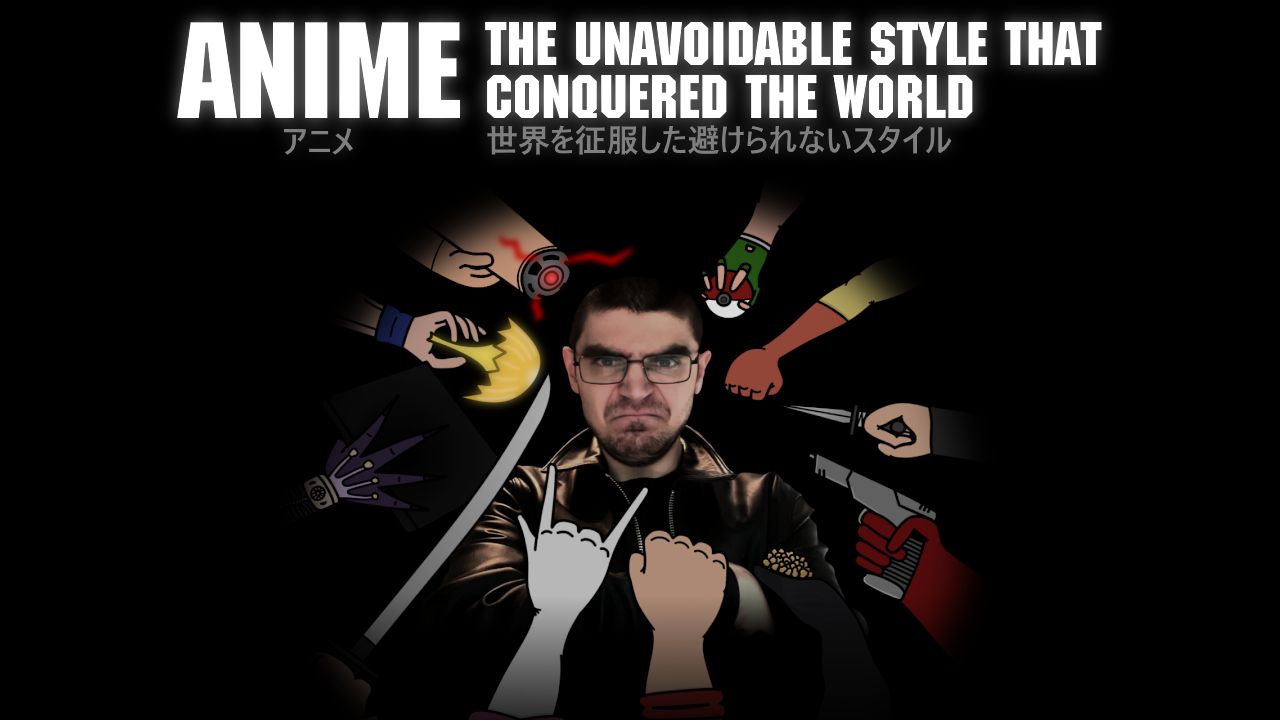
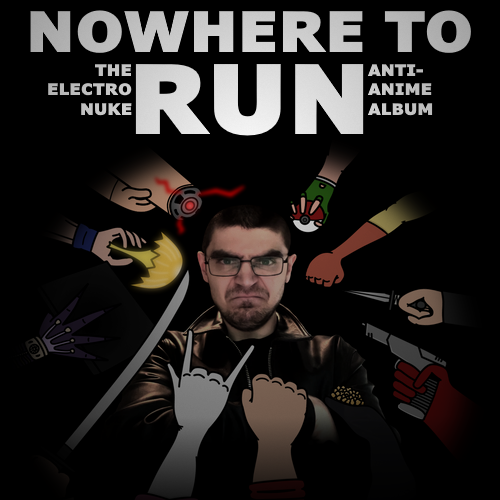
Anywho, “Nowhere to Run” would become both the title and the opening track of a custom album I made about my lifelong rivalry with the art style, the artwork using this post’s John Wick: Part 2 poster-inspired heading image. As you can see, the characters holding me hostage include, from left to right: AstroBoy, Goku, Ryuk from Death Note, someone from Attack on Titan (I don’t care who), Sailor Moon, Luffy from One Piece, No-Face from Spirited Away, Shōtarō Kaneda from Akira, Naruto, One-Punch Man, and Ash from Pokémon. Yes, I’ve been forced over the years to learn more about anime and its characters than I’d ever care to know by choice.
A Quick (and Suggestive) Aside
So… uh… you remember my brief mention of the more… well… sexual side of anime and my far greater sensitivity towards it compared to “normal” anime? Well, I can only assume this started with HuniePop, but I’ve unfortunately found my fellow YouTubers indulging in other such obscenely perverted “visual novel” anime games, from one viral horror phenomenon that I’ll only be referring to as Doki-Doki Banana Chips (as a loving tribute to Sonic Adventure 2) to the shameless, trashy, nudity-riddled Sakura series that came before and after. To this day, I’ve tried with every fiber of my brittle body to avoid anything of the sort resembling… well, I’ve never been comfortable using the term “hentai”, so I’ve decided to use the term “Rem Lezar” in its place as a form of codespeak. This term originates from Creating Rem Lezar, a bizarre children’s superhero musical that was featured on one of the best episodes of RedLetterMedia’s Wheel of the Worst. My reasons for using this instance of nonsensical word salad as a cleaner, less discomforting euphemism for… well… a form of Japanese pornography known for its sickening usage of underage sex and tentacle abuse can be summed up in the short video clip below.
Of course, I do have something discouraging to address before moving onto the funnier stuff, although it does give me an excuse to embed a rather cathartic video clip. See, just as anime is basically inescapable online, hent… I mean, Rem Lezar… is practically treated with the same care, admiration, and reverence by the general public despite being… well… sometimes underaged, sometimes slimy cephalopod appendage-riddled fetishistic pornography, to the point where a Nobel Prize-winning author having his professional Zoom meeting interrupted by this type of adult material in particular is laughed off as just another silly Zoom occurrence (this was done in an article by the news site Futurist that I don’t have enough respect to provide the link for), and all while it keeps me awake at night with the prospect of the same thing happening to me in a future professional work environment. One especially disturbing case of this online reverence for, again, oftentimes pedophilic and nonconsensual tentacle porn was my discovery that even scrolling slightly down the front page of the Internet Archive, the website of a nonprofit public media library set up in San Francisco, will lead you to a Rem Lezar collection with a cartoon octopus for its icon. You know what? I really don’t care that they invented the savior of nostalgia that is the Wayback Machine. I hope their fate is eventually sealed by the lawsuit they were hit with a few months back.
Frankly, I don’t want to continue talking about this bullshit much longer, so I’ll only be making a couple more minor remarks on it. As I mentioned, anime has somehow squeezed its way into RedLetterMedia’s videos, but I recall searching through Rich and Jack’s now-abandoned gaming channel, Previously Recorded, only to be horrified to find out they’d released a video about Panty Party, a pathetic visual novel game I had the displeasure of knowing at the time. I thought my whole viewpoint toward Rich Evans would be permanently shattered by watching this video…
…except that he and Jack were both equally humiliated by the game and left questioning who in God’s name it was made for, even to the point where Rich covered his entire head with a blanket the whole time and demanded that he be credited as Alan Smithee at the end, and credited as such, he was (Alan Smithee is a now-retired pseudonym used by directors who wanted to avoid any credit or association with the film they made, for anyone who’s too young to get that reference.) Thus, not only is Rich Evans still my favorite member of the team, but I think I might love him even more now that I’ve seen that video. He even pointed out sometime in that an underaged girl onscreen was asking him and Jack “what kind of panties we like” and complained that he’s treated like “the bad man” for saying anime can be disgusting.
You know, for eons, social psychologists have been seeking the answer to one quandary: is it possible to make a grown man cry tears of joy in response to the claim that anime can be disgusting? The answer is yes. Yes, it is, but especially if it’s preceded by twenty minutes of interactive cartoon child porn.
A third note to mention regarding this whole topic is maybe possibly the best anime parody I’ve ever seen… although, for personal reasons, watching it is still unbearably discomforting. Plenty of fans and/or active players of the Grand Theft Auto series may know about one fictional anime series in the GTA universe, and this show in particular was banned in the U.S. for obscenity, with only a single episode becoming available for viewing through illegal overnight shipping. The show itself, with the comical title of Princess Robot Bubblegum, basically pokes fun at the entire history of the art style, as well as the more religiously devoted members of its fanbase. Unfortunately, the animation, characters, and sexual material make it just about impossible for me to watch without suffering from an agonizing level of cringe (which may actually act as a benefit, as it’s aiming to replicate the style to the best of its abilities), but in GTA V, the in-game website for the show contains a hilariously satirical, backhanded message to its fans, including the simply but indescribably succinct phrase of, “It’s culture, not perversion!” What this phrase is says is the exact opposite, which is that, despite the excuses some people are willing to offer for the more sexualized side of anime given the culture it comes from, it’s still another example of human perversion—just a different kind of perversion from a foreign country. I really can’t put into words how brilliant this parody is… and how deeply, deeply uncomfortable it makes me.
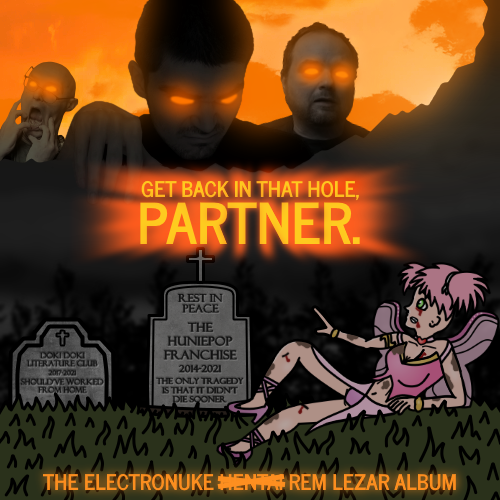
Now, call it just another piece of evidence for me having way too much free time on my hands, but just like the “Nowhere to Run” album I made, I have my own custom album that reflects my feelings toward this discomforting sexual side of anime. Granted, the title does require some explaining, as the phrase, “Get Back in That Hole, Partner” is the name of a mission and song title from Red Dead Redemption: Undead Nightmare, and just like most topics discussed in these posts, RedLetterMedia plays into my usage of it within this context. They once referred to continuing franchises that refuse to die like Star Wars, Star Trek, Harry Potter, Indiana Jones, Ghostbusters, Alien, Predator, and others as corpses that keep attempting to claw their way out of their graves, and each time, people like them keep attempting to kick them back down, as if to say, “No! Stop! Your time is over! Get back in that hole, partner!” Considering crap like FunieNot and Doki-Doki Banana Chips have found several ways to live on in the past, I’ve been the one to attempt to kick them back down in their graves. In fact, funny enough, when talking about Birdemic 3 on a new-ish episode of Best of the Worst—the third film in a franchise they never saw the same value in as other people—RedLetterMedia was insistent that the franchise finally stop and die after spawning three titles too many, much like the FunieNot franchise. So, let the message of “get back in that hole, partner” be preached to all the HuniePops, Doki-Dokis, and Sakuras of the world, and let this ridiculous album cover I made preach it for me!
The Finer Origins of Discomfort
I don’t expect to convince anyone to feel the same way about anime as I do by the end of this post. In fact, I get the strong impression that I only feel so strongly about it and notice its constant presence in pop culture due to my autism (then again, so many of the people who like it are autistic themselves.) As I’ve mentioned in previous posts, and as an entire section of a future post will be dedicated to, typical symptoms of high-functioning autism include hyper-fixation and severe sensory and emotion-driven sensitivities. This is why people on the spectrum like me tend to dwell for so long on basic, menial, and oftentimes materialistic things—we form positive and negative attachments to these things based on our sensory and/or emotional experiences with them. One of the reasons I still play the GameCube-era Sonic games and watch the first three seasons of SpongeBob is because of the whirlwinds of positive emotions I find myself swept up in while doing so. There’s a welcoming sense of comfort that comes with playing and watching them, due in part to their specific character and stage design, environments, and soundtracks. Given this fact, I think anime does bother me on a greater and more visceral level than others thanks to the negative emotional stimulation I get from it, although even my neurotypical mom was so innately bothered by the animation of Spirited Away when my family saw my dissection video that she rejected the notion that a meaningful story could ever be told from it (my dad described it as “nails on a chalkboard”.) Since even they’ve given me a hard time over my feelings toward it… even though they themselves feel the exact same way… I feel like I might as well get into the nitty-gritty of the anime I’ve seen, or more specifically, associated elements and how they differ from those I’m comfortable with.
First off, there’s a basic, critical rule in the animation process: the progression between frames. For frames to blend together seamlessly, one needs to transition naturally into the next, in a way that forms the illusion of natural, fluid, and believable movement. Now, a form of animation I can give slightly more leeway than 2D animation is stop-motion, as it’s exceedingly hard to find works of stop-motion with near-seamless frame progression. It may very well be the toughest animation style to get right. As a matter of fact, I’ve laughed in the past about how some of the most fluid stop-motion I’ve ever seen wasn’t in any of the works by established directors like Henry Celik and Wes Anderson, but instead in Stuart Gordon’s post-apocalyptic b-movie schlock Robot Jox from 1989! For the longest time, I just assumed it was 3D animation because I didn’t think such a high level of fluidity could be achieved through stop-motion! It would have been low-quality animation by today’s standards but fine for ’89. Furthermore, I won’t go as far as to call myself a Disney fan, but from the rotoscoping of Snow White to the 2D animation of their Renaissance Era (The Lion King and Hunchback of Notre Dame might be the two pinnacles of stunning-quality 2D animation), they’ve been able to consistently abide by this basic rule to the letter when it comes to perfectly balancing out their levels of detail with natural and believable movement. So… on that note, we need to get into the topic of anime. See… anime always breaks this rule. Constantly. Defiantly. The best way to describe frame progression in anime is that it looks suspiciously like one out of every two frames (literally one out of every two frames) is entirely skipped, and this seems to be done so often that I’ve honestly started to believe it’s intentional. When characters do so much as walk, their movement is severely limited, and their limbs seem to jump from one position to the next as if they’re teleporting. It’s so unimaginably jerky and off-putting that I feel the need to reference a point Mike made on an old episode of Half in the Bag, that seeing it onscreen is like going to a concert where the singer is consistently off-key and none of the instruments are tuned properly. You can tell something isn’t being done correctly, so other people being unable to tell is made that much more frustrating. You just know you’re right because it’s such an objective flaw that sticks out so blatantly.
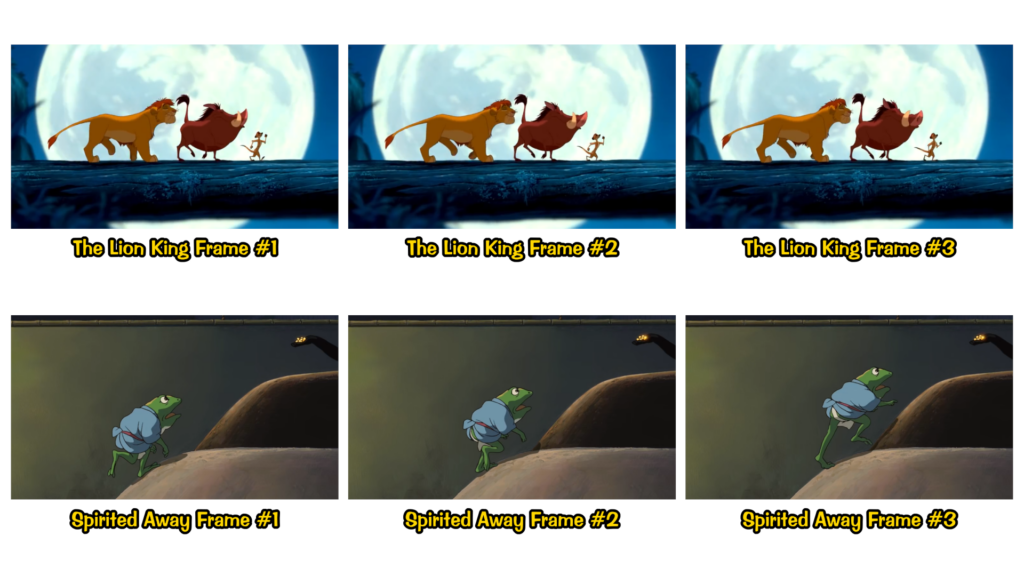
Speaking of limited movement, I know I might be breaking some kind of internet law by doing this, but I have to compare the animation styles of SpongeBob, Sonic, and Studio Ghibli in this respect. Now, consistent motion isn’t just an animation rule—it’s a rule that spans every artistic medium dependent on motion. You never want to focus on a subject freezing in place for an extended period—there should be at least some form of movement from a subject in any given shot. Something I’ve always noticed in SpongeBob is that, if characters are talking, they’ll bob their heads slightly every couple seconds, oftentimes paired with appropriate gestures. This notably applies to casual scenarios, like when SpongeBob’s trying to warn Squidward against quitting his job in the episode “Can You Spare a Dime?” Not a lot of movement is happening, but when SpongeBob tells him, “It’s a cold, cold world out there,” he swivels his head according to the pacing of his delivery, immediately after which he shrugs both arms and says, “No one’s going to serve you happiness on a silver platter!” (humorously, a lady comes by at that moment with a tray of cookies.)
In the world of Sonic, some of my favorite pieces of animation (aside from the adorably awkward shot of him falling into the jungle and flattening like a pancake after chasing Eggman off the Egg Carrier) are his medium-speed running animations in the Adventure games, but primarily in the first title. The real-world way a human runs is by pushing down on the ground with one foot, thus providing the necessary force to lift the rest of the body upward and repeat the process with the opposite foot. His running animation seems to replicate this constant cycle of pressure and release in an accurate manner, similarly to Honda’s famous robot ASIMO. Now, of course, Sonic Adventure‘s cutscene animation has plenty of issues regarding animation clip transitions and lots of awkward cut-off issues, but although this does give it an admittedly cute retro charm in hindsight, the series proved with time that, as soon as they could pull off more believable movement, they did, as even Sonic Adventure 2‘s cutscene animation is incalculably more natural than its predecessor thanks to early mocap technology.
By comparison, you may remember the part of my Spirited Away dissection video where I inserted Sen and the “dragon boy” (his name is Aku, which still makes me think of Samurai Jack even though I haven’t watched it) into an episode of Cake Boss. Well, just to perfectly sync Aku’s lip movement with a member of Buddy’s team shouting, all I needed was three frames because that’s all the shot of him talking in the original scene consists of until he moves his head slightly—a several-second-long shot of him talking is a mere three frames. When it comes to capturing believable movement, that’s an uncanny disaster in the making.
Now, we get into a topic that I, as an aspiring writer, really need to take into account, and that’s well-executed humor. This is probably one of the more “alien” aspects of anime (as in, not from planet Earth or any Earth-based culture), as it’s seemingly executed in a way that lacks an understanding of the basic rules of comedy, let alone cartoon comedy. Granted, I’m sure people who like it would be willing to point out that some anime features legitimately clever and well-executed humor, so for the sake of my argument, I’ll be using the aforementioned humor from the pilot episode of Bleach, as I’ve inadvertently seen the same brand of humor used in everything from Naruto to non-anime shows like Avatar. See, in a cartoon, you can get away with some incredibly bat-shit, unrealistic, and over-the-top humor. In fact, I’ll be dedicating an upcoming post to how this brand of humor makes an underrated season two episode of SpongeBob my personal favorite in the whole series.
Continuing on with the topic of that show, by the way, two episodes where this humor is executed best are “Wet Painters” and “Rock-a-Bye Bivalve”. In the former, SpongeBob successfully manages to paint the interior of Mr. Krabs’s house with Patrick after a ridiculous sequence of events, but upon laying eyes on a single solitary speck of paint on the first dollar Mr. Krabs ever earned, he freezes in place as his eyes crack open and his blue irises ooze out of them like silly string, after which he collapses onto the floor altogether—after all, they were told they’d get their asses cut off if they got a single drop on anything. So, then, when he tries wiping the paint off with his tie and realizes it now covers the whole dollar, the top of his head spikes upward, he squints his eyes, and the corners of his mouth extend to both sides as he screams in panic. Unrealistic and overdramatic, yes, but given the stakes and how dire the situation has become, it’s on a fitting enough level that it works.
Furthermore, in “Rock-a-Bye Bivalve”, SpongeBob has gone through the litany of raising Junior, the abandoned scallop he and Patrick took under their wing, and at his breaking point, he gives Patrick a piece of his mind for slacking off and watching TV every night after work. Then, after Patrick finally agrees to come home and take care of Junior by six, he comes home late from a raucous party. SpongeBob’s rightfully pissed at this point, in response to which Patrick gets fed up returns to his rock, or as he puts it, “back to work”. SpongeBob learns that Patrick hasn’t been working since the beginning, but has instead been watching TV in secret, so he dumps all of the donuts and ice cream in his “briefcase” onto his head in a rage. When Patrick nags, “So, this is the thanks I get for working overtime?” SpongeBob explodes, his mouth bearing oversized teeth as his bottom jaw drops to the floor and he wails, “OVERTIME?!” Again, the height of the reaction correlates with the height of his emotions, as they’ve been building up so exponentially throughout most of the episode. There’s an appropriate buildup, release, and timing to that final reaction that makes it feel both earned and that much funnier.
Now, when Ichigo walks through his front door in the Bleach pilot, before we even know who his family is, we get his father kicking him in the face in slow motion, after which they rapidly slap away at each other like tiny children fighting on a schoolyard. Meanwhile, the mother is sweet, innocent, passive, and clueless about the chaos that’s transpiring across the room, and the sister just comes off as cynical and careless all the while, as if that instantly creates effective comedic timing… only it doesn’t, because we have no idea why the ridiculous fight at the front door is happening. Now, if you have his father simply mocking him for coming home late or… seeing ghosts, I guess… and if his wife calls him out on his attitude, you could pull off some solid comedic timing by having him respond with, “Well, you know, all things considered, I’d say I knocked it out of the park.” Instead, on the other hand, when the sister calls him out on it, he reels back with tears pouring from his eyes as he yells, “ME?! WHAT DID I DO?!” like a bratty prepubescent child (in gathering clips for the demonstration below, I did happen upon the Japanese subtitles, and it’s the exact same gist.) It almost comes off like, in the minds of the people behind stuff like this, goofy expressions + characters abruptly lashing out at each other in a cartoony fashion + a vacant lack of awareness in the other characters = comedic value, but ultimately, you have all these characters who move, talk, react, and treat each other like complete lunatics. Going balls-out, over-the-top, and over-expressive is unnecessary and overwhelming if there’s no real rhyme or reason to it.
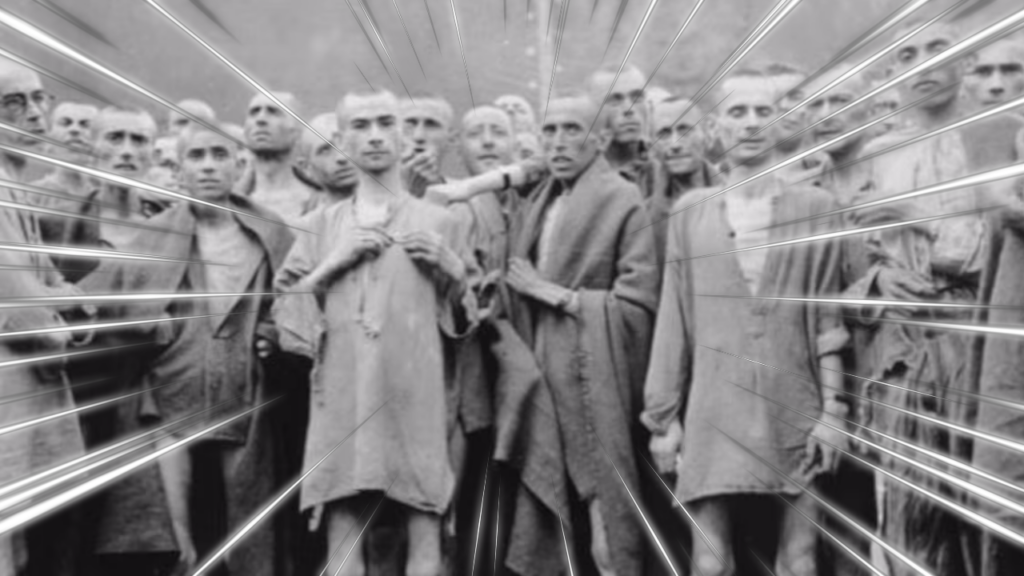
I should note that I have found myself laughing at Japanese humor on plenty of occasions—sometimes even at the unintentional humor. What makes the Sonic pancake-flattening animation I brought up earlier so hysterical is that there are no crazy camera movements, sound cues, or even music tracks that occur when it happens. He just flattens like clay against the jungle floor, pops back up cross-eyed, shakes around in the air Loony Toons-style, and moves on like nothing ever happened. The comedy comes from the fact that it’s not played up the same way as the demonstration above because it doesn’t have to be—it just kind of happens, thus making it that much more amusing. It’s a prime and underrated example of “less is more”. In fact, in terms of attention, I’ve already suggested with works like Avatar and modern DC Comics animation that the anime visual style has become so overwhelmingly prolific on a global scale that it can no longer be considered unique. Just take a look at the tiringly overused “speed line” effect, which isn’t even used for fast-paced humor or action scenes anymore! People layer it over everything now! How about we stick it over a photo of the Holocaust, just for good measure?
One Final Analogy to Tide You Over
It’s amazing (and kind of depressing) that I’ve been able to speak so goddamn much about something plenty of other people don’t give a second thought to, but I suppose that’s autism for you. Ultimately, I don’t want this post to come off as bitter or hateful, as the topic at hand is more of just another general nuisance than anything, but it still tends to be at the forefront of my thinking, and there’s really not much I can do about it. So, allow me to finish everything off with a rather silly analogy and self-made video to lighten the mood a bit more. For one reason or another, my desire to write this post started out strong when I woke up this morning, and just as I was waking up, I thought up a comparison to a pre-existing YouTube video that offered me some much-needed laughter. I’m sure most of us can recount some of the many, many memorable Skittles commercials from years gone by (these follow the “x the Rainbow, Taste the Rainbow” format), but one in particular went somewhat viral on YouTube for telling the tale of a sad, jaded old man who turns everything he touches into Skittles, and it’s all presented as the legitimate tragedy of a person with an unwanted and destructive power. Case and point, I relate to this Morgan Freeman lookalike motherfucker, as it feels like pretty much everything I touch and embrace turns to anime. Hey, listen, it doesn’t matter if you like Skittles or anime—you might love fidget spinners, but would you feel comfortable holding your partner’s hand with the knowledge of what would happen? How would you like a fidget spinner for a partner? Would you be comfortable with that? Yeah, that’s what I thought.
I think I lost the thread just now. Thanks for reading, morons! Give archive.org my worst regards!

Leave a Reply